Oil's spread still underprices Hormuz risk
Sunday, Nov. 22, 2026 — A market can watch tankers get hit and still cling to the wrong benchmark. Brent’s premium over WTI is behaving as if this were still mainly a U.S. surplus story, and that looks too complacent for a real seaborne disruption.
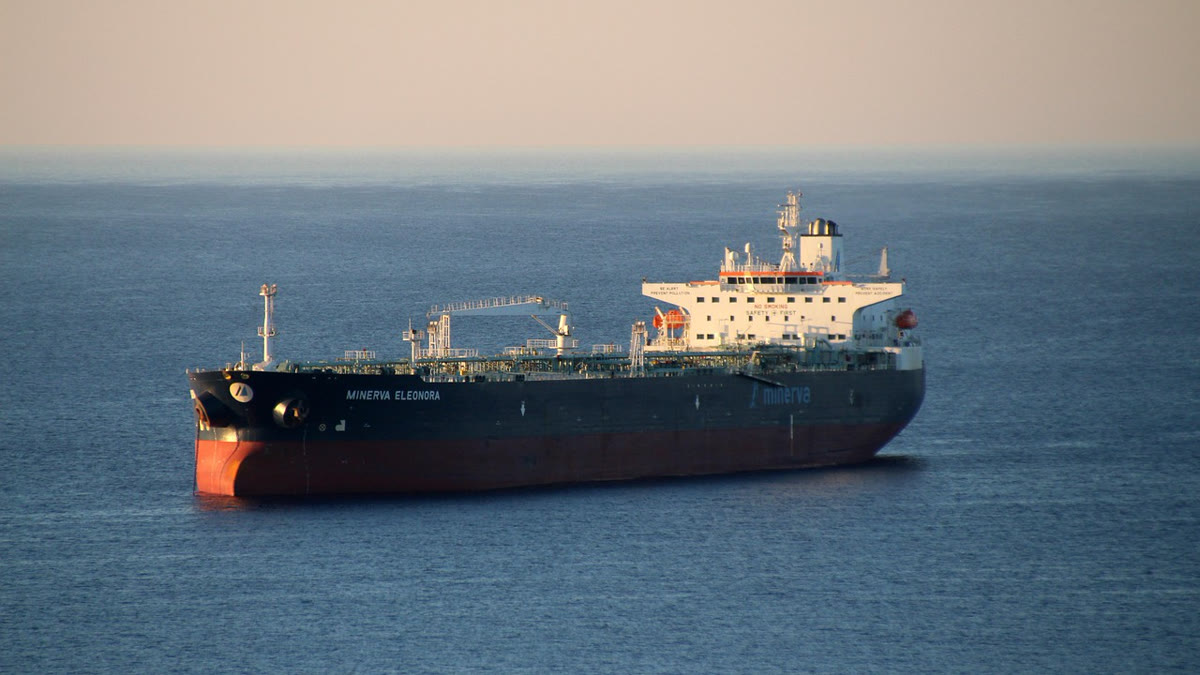
A market can watch tankers get hit and still cling to the wrong benchmark. We think oil is doing that now. The attacks around the Strait of Hormuz are a real seaborne disruption, yet Brent’s premium over WTI is behaving as if this were still mainly a U.S. surplus story. That relative move looks too complacent.
The prevailing interpretation is more cautious. UKMTO’s incident reporting and EIA’s flow work both point the same way: the attacks are real, but trade is adapting, so the narrower Brent-WTI spread is not yet proof of a full global supply shock. That view assumes a tighter spread means U.S. balances and WTI-linked stocks should still dominate, and that Brent should only pull decisively ahead if exports are clearly being choked off. We think that is partly right on timing, but too relaxed on what kind of shock this is.
This is a shipping disruption, not a rumour
The first point is simple. This is not gossip in the Gulf. Interfax reported that at least six oil tankers were attacked near the Strait of Hormuz in a week. UKMTO’s latest advisory says multiple tanker incidents on 20 and 21 November were attacks, including outbound vessels struck by unknown projectiles, with fires on board and no crew casualties reported in that update. UKMTO’s own incident log lists tanker attacks in the Strait on 20 November and again on 21 November. Over the last 30 days, UKMTO has recorded 35 incidents in total.
That matters because the chokepoint is maritime by definition. If ships are being hit in and around Hormuz, the first economic effect is not on a Cushing tank farm. It is on seaborne availability, voyage risk, insurance and routing.
Late on Sunday, Nov. 22, 2026, Iran’s Press TV cited the IRGC Navy as saying two supertankers had hit naval mines in the Strait and warned shipping firms. That is an official claim, not independently verified evidence here. We do not need it anyway. UKMTO’s log is already enough to establish that the disruption is real.
Brent should be doing more of the work
EIA’s own work earlier this year gives the template. In July, EIA said the second-quarter Hormuz disruption reduced access to crude for much of the world and pushed buyers towards alternative supply, lifting U.S. refinery margins, production and exports. EIA also said Brent’s daily swings widened sharply in that period, a sign that Hormuz risk hit Brent-linked seaborne barrels harder than WTI. In a separate analysis, EIA linked Hormuz disruption to higher tanker rates and war-risk insurance costs, with Middle East tanker rates hitting a multi-decade high in March. And EIA explicitly said Brent rose more sharply than WTI earlier in 2026 because higher shipping costs and reduced oil flows between regions near Hormuz hurt seaborne crude, while strong U.S. inventories and SPR releases limited WTI.
Now look at what the spread has actually done this week. On 19 November, WTI settled at $82.44 a barrel while Brent settled at $89.40, a Brent premium of $6.96. On 20 November, WTI settled at $83.27 and Brent at $89.80, cutting that premium to $6.53. So after a week of tanker attacks, the Brent-WTI spread narrowed by $0.43, or about 6.2%, using $6.96 and $6.53. That is the opposite of what a worsening maritime bottleneck would normally imply.
WTI’s outright move has also been restrained. It was $82.99 before the first headline in this run on 19 November, reached a high of $84.04 on 20 November, and had traded as low as $80.84 earlier that same day. A market repricing a truly global supply panic does not usually look that contained.
The best case against us is real
The strongest evidence against our view is not weak. EIA said on 19 November that collective oil shipments through Middle East chokepoints rose 19% in the third quarter because producers used smaller ships and ship-to-ship transfers to keep barrels moving. EIA also says continued Hormuz disruption and alternative-route flows have already been reflected in prices, even with Brent falling below $100 a barrel on 4 November before later volatility. That means adaptation is not theoretical. It is happening.
The U.S. balance also is not screaming shortage. EIA’s latest four-week U.S. products supplied measure was 20.58 million barrels a day as of 13 November, down 0.546 million barrels a day in four weeks and only 0.1% above its five-year average. U.S. crude imports were 6.26 million barrels a day, up 0.17 million barrels a day over four weeks, while net crude imports were 2.14 million barrels a day. Those figures help explain why WTI is not being forced higher by domestic tightness.
So yes, the prevailing view is partly right. A narrower spread is not yet proof that the market is blind. It may simply mean trade adaptation is still working and U.S. barrels remain relatively comfortable.
What would prove the market wrong
But that is exactly why the relative-value trade matters more than the outright oil call. If the attacks keep materially biting shipments, Brent should outperform WTI from here because the transmission channel is maritime, not inland American scarcity. That points to long Brent against short WTI as the cleaner position than simply buying crude. It also points to firmer tanker-linked freight and better support for Asia-facing grades than for U.S.-anchored barrels, because EIA’s earlier work ties Hormuz stress directly to freight, insurance and reduced regional flows.
The test is straightforward. If UKMTO keeps logging tanker attacks and actual export flows start to suffer despite rerouting and ship-to-ship transfers, Brent’s premium should widen again. If ships keep moving, U.S. imports stay steady and the spread refuses to respond, then the market’s scepticism will have been justified. For now, the narrower spread still says traders think this is a U.S. surplus market first. We think that remains the wrong hierarchy, unless adaptation keeps beating disruption.
Key data
| Measure | Value | Source |
|---|---|---|
| UKMTO incidents in the last 30 days | 35 | UK Maritime Trade Operations, via GoldSquawk data |
| WTI settle on 19 Nov. | $82.44 | GoldSquawk settlement data |
| Brent settle on 20 Nov. | $89.80 | GoldSquawk settlement data |
Primary sources
- U.S. Energy Information Administration (EIA) · Petroleum markets responded to disruptions in the Middle East in the second quarter
- U.S. Energy Information Administration (EIA) · Crude oil and petroleum product prices increased sharply in the first quarter of 2026
- U.S. Energy Information Administration (EIA) · Oil flows through Middle East chokepoints increased in the third quarter
- U.S. Energy Information Administration (EIA) · Middle East crude oil tanker rates reached a multi-decade high in March
- U.S. Energy Information Administration (EIA) · Short-Term Energy Outlook
- GoldSquawk data: Brent-WTI spread (ICE Brent and NYMEX WTI front-month futures); Shipping attacks (UKMTO) (UK Maritime Trade Operations); US oil demand (US Energy Information Administration); US crude imports and exports (US Energy Information Administration)
General market commentary only. Not financial advice.